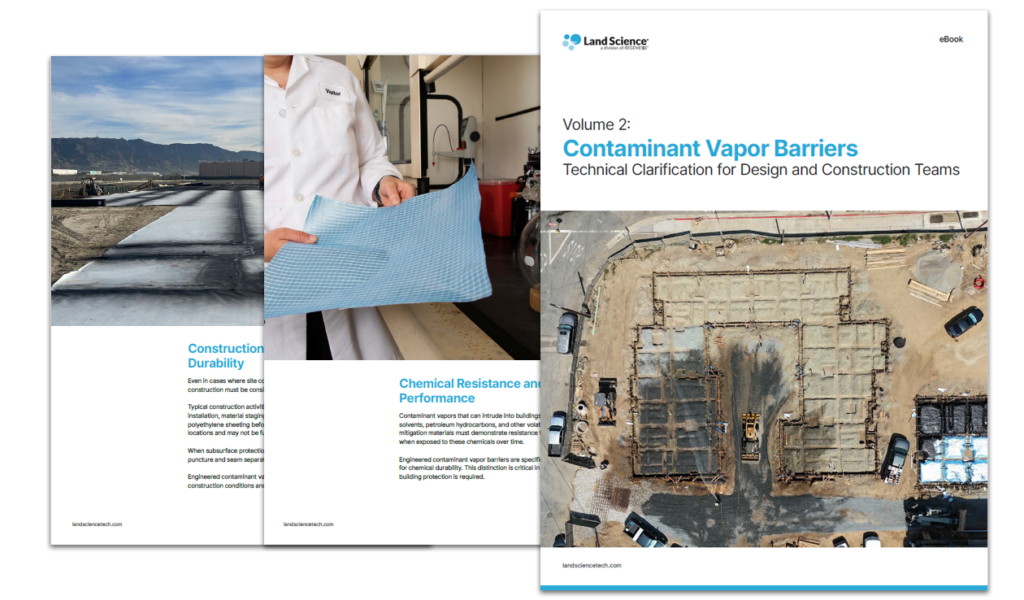
- Why moisture control materials are not vapor intrusion mitigation systems, and why thin polyethylene sheeting is not engineered for chemical vapor protection
- How real-world construction conditions can compromise non-engineered barriers and increase performance uncertainty
- What constitutes a true vapor intrusion mitigation system, including regulatory expectations, chemical resistance, and the importance of installation verification and QA/QC
When vapor intrusion protection is required, addressing it during construction is critical. Using engineered contaminant vapor barriers helps reduce uncertainty, protect occupants, align with regulatory guidance, and avoid costly post-construction remediation—supporting long-term building performance with confidence.